

Corporate video production is one of the most in-demand creative services in Australia, and businesses of every size are investing heavily in video content. According to a 2024 report from HubSpot, 91 percent of businesses now use video as a marketing tool, up from 61 percent in 2016. That trajectory shows no signs of slowing down. For anyone considering a career behind the camera, a videography course focused on corporate production opens the door to steady, well-paying work that does not depend on seasonal demand.

Why Corporate Video Is Booming
Australian businesses are competing for attention in an increasingly digital marketplace. Whether it is a brand story for a company’s website, an internal training video, a product launch campaign, or a testimonial reel featuring satisfied customers, video content consistently outperforms text and static images in engagement metrics. LinkedIn reports that video posts generate five times more engagement than any other content type on the platform, and YouTube remains the second-largest search engine in the world.
This shift has created enormous demand for skilled videographers who can plan, film, and edit professional video content. Small to medium businesses in particular often lack in-house video teams and rely on freelance videographers for their content needs. A single corporate client can generate thousands of dollars in recurring revenue if you deliver quality work and build a strong relationship. A videography course gives you the structured training to serve this market professionally from day one.
Core Skills a Videography Course Covers for Corporate Work
Corporate video production demands a different skill set from wedding or event videography. The focus shifts from capturing spontaneous moments to controlled, pre-planned production. A well-structured videography course covers all the fundamentals you need.
The first skill is pre-production planning. Corporate clients expect a professional process, and that begins with understanding the brief, defining the target audience, scripting or outlining the content, and creating a shot list. You will learn how to conduct pre-production meetings, manage client expectations, and develop timelines that keep projects on schedule and on budget.
Camera operation for corporate work emphasises consistency and control. You will learn how to set up interviews with proper framing — typically a medium shot with the subject positioned on one-third of the frame — and how to film b-roll that supports the narrative. Corporate b-roll might include office environments, production facilities, team interactions, or product close-ups. A videography course teaches you to approach each shoot with a checklist that ensures you capture every element needed for a polished final product.

Mastering the Corporate Interview
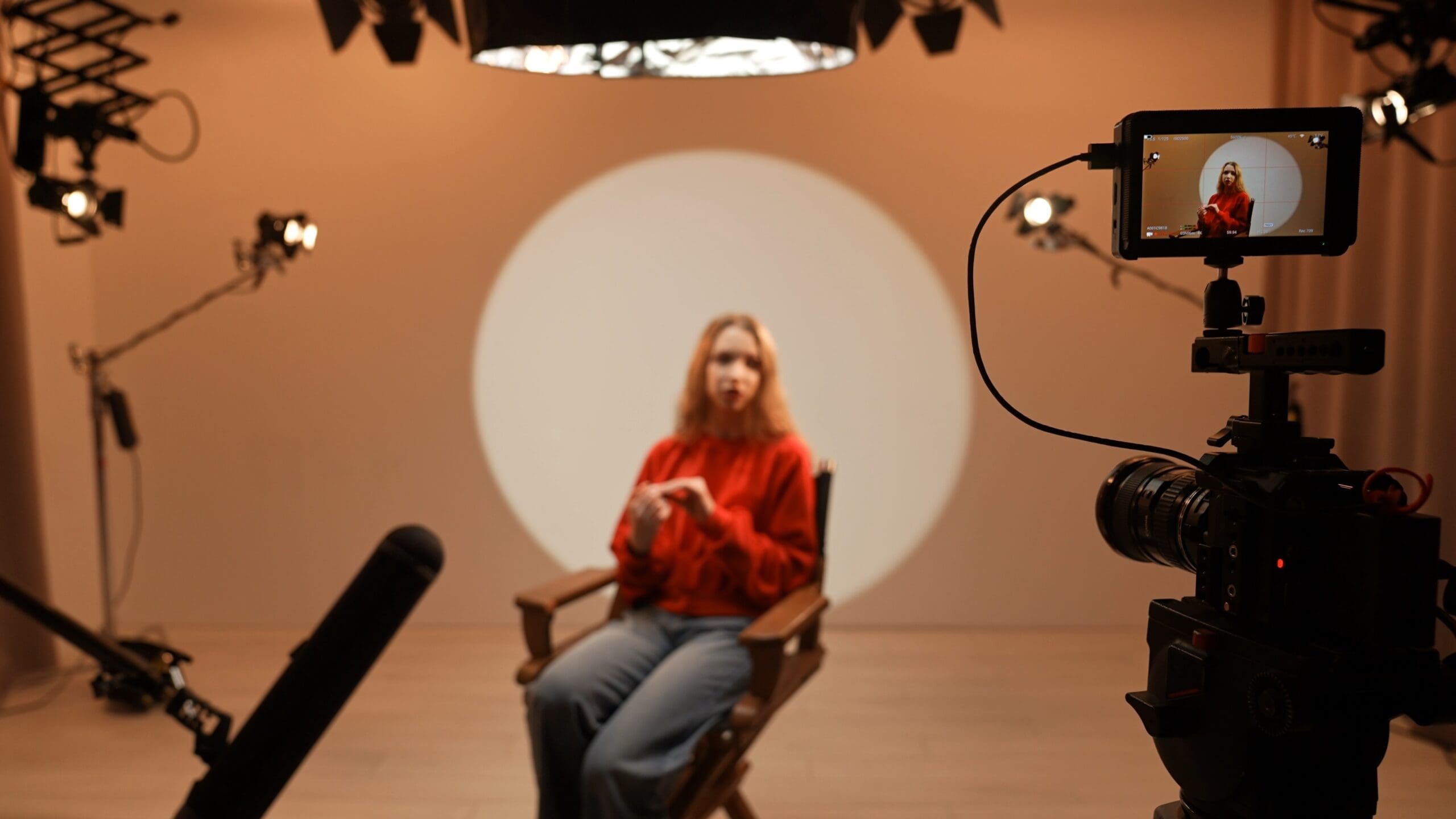
Interviews are the backbone of most corporate videos. Whether you are filming a CEO discussing the company’s vision, a customer sharing their experience, or an employee explaining a process, the interview format requires specific technical and interpersonal skills.
Technically, you need to understand three-point lighting setups — key light, fill light, and backlight — to create a professional, flattering look. You need to know how to position your microphone for clean audio, whether using a lavalier clipped to the subject’s clothing or a boom microphone positioned just outside the frame. And you need to manage your camera settings to ensure consistent exposure and colour throughout the interview.
Interpersonally, you need to make your subject comfortable. Most people are not natural on camera, and corporate interview subjects are often nervous executives or employees who have never been filmed before. A videography course teaches you techniques for putting subjects at ease, asking questions that elicit natural and detailed responses, and directing without creating a stiff or scripted feel.
For supplementary techniques on conducting professional interviews, Wistia’s guide to video production provides excellent practical advice that complements formal course training.
Lighting for Corporate Environments
Corporate shoots often take place in office environments with unflattering fluorescent lighting, glass walls that create reflections, and limited space for equipment. Learning to control and modify available light is a skill that separates competent corporate videographers from amateurs.
A videography course teaches you how to use portable LED panels to create consistent, flattering light in any environment. You will learn how to balance colour temperature between artificial and natural light sources, how to use diffusion to soften harsh shadows, and how to position lights to create depth and dimension in otherwise flat office spaces. Understanding these principles means you can walk into any corporate environment and produce professional-looking footage without requiring an elaborate lighting rig.
Audio Recording and Management
Audio quality is non-negotiable in corporate video production. Viewers will tolerate slightly imperfect visuals, but poor audio immediately undermines credibility and professionalism. A videography course dedicates significant time to audio because it is that important.
For corporate interviews, you will typically use a lavalier microphone connected to either your camera or a dedicated audio recorder. Redundancy is essential — always record a backup audio track. You will also learn about room acoustics and how to minimise echo in hard-walled office environments using simple techniques like strategic furniture placement and portable sound blankets.
When filming b-roll, capturing natural ambient sound adds production value. The hum of a busy office, the sound of machinery in a production facility, or the chatter of a team meeting all create atmosphere when mixed subtly beneath the interview audio in post-production.

Post-Production for Corporate Clients
Corporate video editing follows different conventions than creative or cinematic work. The editing must be clean, professional, and aligned with the client’s brand guidelines. A videography course trains you in the specific workflows that corporate production demands.
You will learn how to structure an edit that maintains viewer attention, typically opening with a hook, delivering key messages in the middle, and closing with a clear call to action. Colour grading for corporate work is generally subtle — the goal is clean, accurate colour rather than dramatic cinematic looks. Graphics, lower thirds, and logo animations are often required, and you will learn how to create these using tools within Adobe Premiere Pro or DaVinci Resolve, or how to integrate assets provided by the client’s design team.
The Adobe Premiere Pro tutorials are an excellent supplementary resource for expanding your editing capabilities alongside your course training.
Building Your Corporate Client Base
Finding corporate clients requires a different approach than marketing to consumers. Your portfolio should showcase relevant work — even if your initial projects are self-produced examples or pro-bono work for local businesses. Create sample videos that demonstrate your ability to film interviews, produce brand stories, and edit clean corporate content.
Networking through platforms like LinkedIn is particularly effective for corporate videography. Attending local business events, joining your regional chamber of commerce, and connecting with marketing agencies are all strategies that generate leads. Many agencies subcontract video production and are always looking for reliable local videographers. Understanding how to price, pitch, and manage corporate relationships is a skill that a photography business course develops alongside your technical abilities.
Pricing Corporate Video Services in Australia
Corporate video rates in Australia vary significantly depending on the scope of the project, your experience level, and your location. As a starting point, day rates for corporate videographers typically range from $800 to $2,500, with post-production charged either as a separate line item or bundled into a project rate.
Package pricing is common for corporate work. A basic interview-and-b-roll package might include a half-day shoot, editing, colour grading, and delivery of one finished video. More comprehensive packages include pre-production consultation, scripting, multi-day shoots, and multiple deliverables optimised for different platforms. Learning how to structure and present these packages professionally is essential for winning corporate contracts.
The Growing Demand for Short-Form Corporate Content
Beyond traditional corporate videos, there is surging demand for short-form content designed for social media platforms. Businesses need 15-to-60-second clips for Instagram Reels, TikTok, LinkedIn, and YouTube Shorts. This content needs to be punchy, visually engaging, and optimised for mobile viewing — predominantly vertical format.
A videography course that covers both long-form and short-form production positions you to serve the full range of corporate video needs. The ability to repurpose a single shoot into multiple deliverables — a two-minute website video, a 30-second social clip, and a series of story-format snippets — dramatically increases the value you offer to corporate clients. Learning these versatile skills through a content creation course pathway gives you a competitive edge in the market.
Your Next Step Into Corporate Video Production
The corporate video market in Australia is large, growing, and underserved by truly skilled professionals. If you are ready to build a career creating professional video content for businesses, the foundation starts with proper training. Explore the Certificate in Videography at Australian Photography School to learn camera operation, lighting, audio, editing, and business skills in one structured program. With flexible online study, a professional camera included in your enrolment, and expert tutors providing personalised feedback, you will have everything you need to start landing corporate clients. Get in touch with our team today and take the first step toward a rewarding career in corporate video production.