
Australia’s coastline stretches over 34,000 kilometres and is home to some of the most spectacular marine wildlife on the planet. Humpback whales breach along the east and west coasts during their annual migration. Bottlenose dolphins surf the waves at Byron Bay and along the Great Australian Bight. Australian fur seals bask on rocky platforms in Victoria and Tasmania. Sea turtles nest on the beaches of the Coral Sea. For photographers, Australia’s marine environment offers subjects that are dramatic, emotionally compelling, and endlessly photogenic. A wildlife photography course develops the specific skills you need to capture these incredible animals in their natural ocean habitat.
Why Marine Life Photography Is Unique
Marine life photography presents challenges that are fundamentally different from land-based wildlife work. Your subjects are often visible only briefly — a whale surfaces for seconds before diving, a dolphin leaps and disappears, a seal turns its head for a fleeting moment of eye contact. The marine environment adds complexity through salt spray on lenses, unpredictable boat movement, rapidly changing light reflecting off water, and the physical demands of shooting from boats, shorelines, or in the water itself.
These challenges make marine wildlife images particularly impactful when done well. A photograph of a breaching humpback whale, a pod of dolphins riding a bow wave, or a curious seal pup making eye contact creates an emotional response that few other photographic subjects can match. A wildlife photography course prepares you for the specific demands of working in and around the ocean.
Equipment for Marine Life Photography
Lens selection for marine photography depends on your access to the subjects. From whale-watching boats, you typically need a telephoto zoom in the 100–400mm or 200–600mm range to fill the frame with subjects that may be 30 to 100 metres away. For dolphins swimming alongside boats, a shorter 70–200mm zoom provides more flexibility to capture fast-moving subjects at closer range. From shoreline positions, the longer telephoto lenses used in bird photography are equally effective for seals, penguins, and other coastal wildlife.
Weather sealing on your camera body and lens is highly desirable for marine work. Salt spray is corrosive and pervasive on boats and shorelines. Even weather-sealed equipment should be wiped down with a damp cloth after every marine session to remove salt residue, and a protective UV filter on your lens front element provides a replaceable barrier against spray damage.
A rain cover or waterproof camera sleeve provides additional protection in heavy spray conditions. These are inexpensive nylon covers that fit over your camera and lens while leaving the controls accessible. For serious wet conditions, purpose-built waterproof housings from manufacturers like Aquatech allow you to use your camera partially or fully submerged.
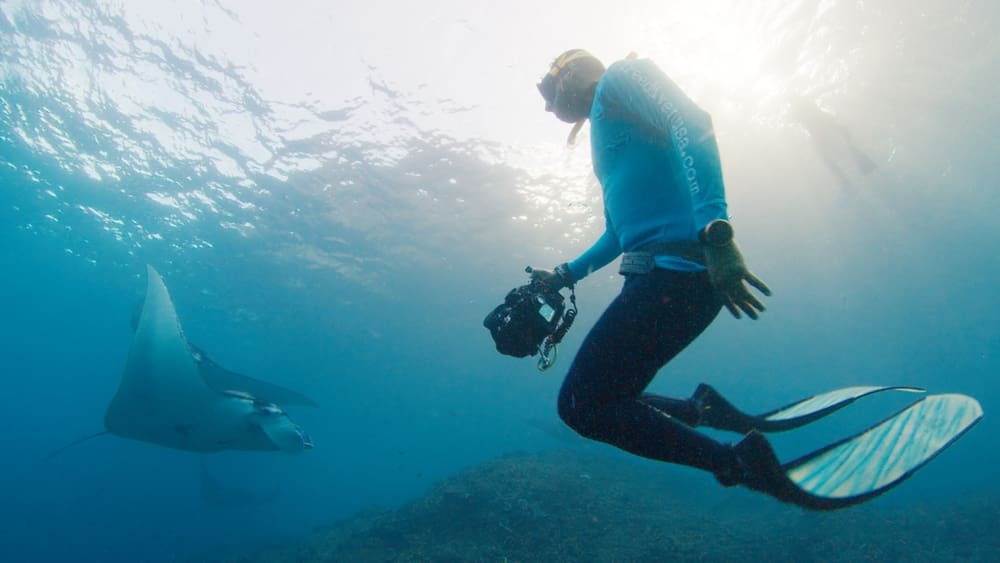
For underwater photography — snorkelling or diving with marine life — dedicated underwater housings are essential. These sealed enclosures protect your camera to depth ratings of 40 metres or more and provide external controls for all essential camera functions. Entry-level underwater housings start at around $500 for compact cameras, while professional DSLR and mirrorless housings range from $2,000 to $5,000. Ikelite and Aquatech are respected manufacturers of underwater photography housings.
A wildlife photography course helps you select the right equipment for your specific marine photography goals and budget, preventing costly mistakes.
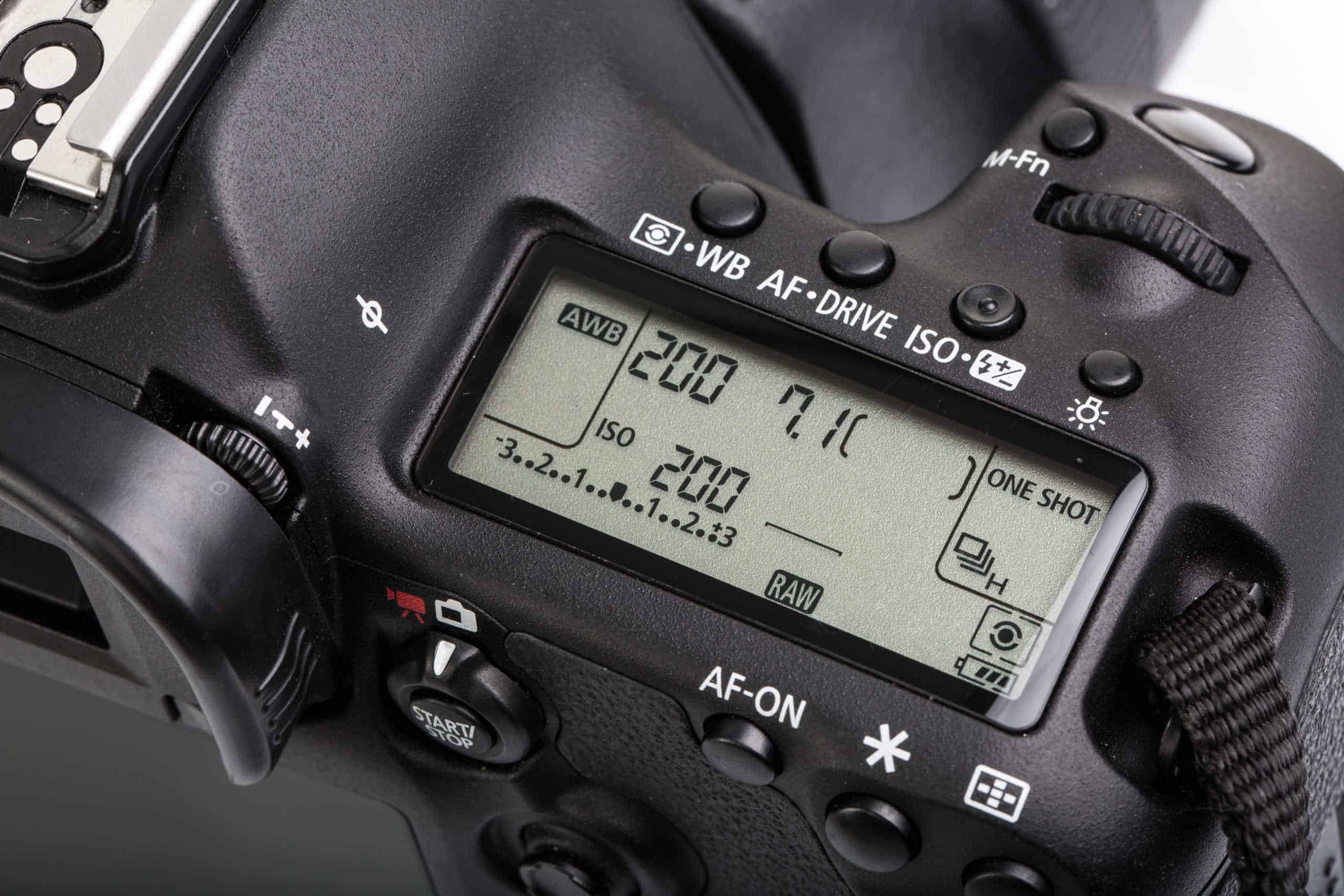
Camera Settings for Marine Wildlife
Speed is the dominant consideration in marine wildlife camera settings. Animals appear and disappear quickly, and peak moments — breaches, leaps, interactions — last fractions of a second.
Set your shutter speed to a minimum of 1/1000 for marine mammals on the surface and 1/2000 or faster for breaching whales and leaping dolphins. These fast shutter speeds freeze the explosive power of a whale launching itself out of the water or the graceful arc of a dolphin mid-jump.
Use continuous autofocus (AF-C) with your camera’s animal detection or wide-area tracking mode engaged. Marine subjects emerge unpredictably, and you need your autofocus system to acquire and lock onto them instantly. Pre-focus on the area of water where you anticipate activity to minimise the time between appearance and capture.
Set your drive mode to the highest frame rate available. When a whale breaches, it happens in two to three seconds. At 20 frames per second, you capture 40 to 60 images during that breach, dramatically increasing your chances of getting the perfect moment — the peak of the breach with maximum water splash and full body visibility.
Aperture priority mode works well for marine photography. Set your aperture to f/5.6 or f/8 for a balance between depth of field and light gathering, and let your camera adjust shutter speed automatically (with your minimum shutter speed set as described above). Auto ISO with a maximum of 3200 or 6400 provides additional flexibility as light conditions change throughout the day.
Whale Photography Techniques
Australia’s annual whale migration — humpback whales travelling from Antarctic feeding grounds to tropical breeding waters and back — provides one of the most spectacular wildlife photography opportunities on Earth. The migration passes along both the east coast (June to November) and the west coast (June to October), with peak activity varying by location.
From land-based vantage points at headlands and lighthouses, patience and observation are your primary tools. Watch for the telltale blow — the spout of vapour as a whale exhales at the surface — and be ready with your camera raised and autofocus engaged. Breaches often occur in series, so if you see one, keep shooting — there may be more.
From whale-watching boats, positioning is crucial. The best photographic position is typically at the bow or side of the boat, unobstructed by other passengers. Communicate with the boat crew about your photographic intentions — experienced operators will often position the vessel favourably for photographers.
Stabilisation is a challenge on moving boats. Brace yourself against a solid structure, keep your elbows tucked against your body, use your body as a shock absorber by flexing your knees, and rely on lens-based image stabilisation to smooth out residual movement. Avoid using a tripod on boats — the vibration transfer through the tripod actually worsens camera shake rather than reducing it.
For information on responsible whale watching and photography, the Australian Government’s whale protection guidelines specify minimum approach distances and interaction protocols that all marine wildlife photographers should follow.
Dolphin and Seal Photography
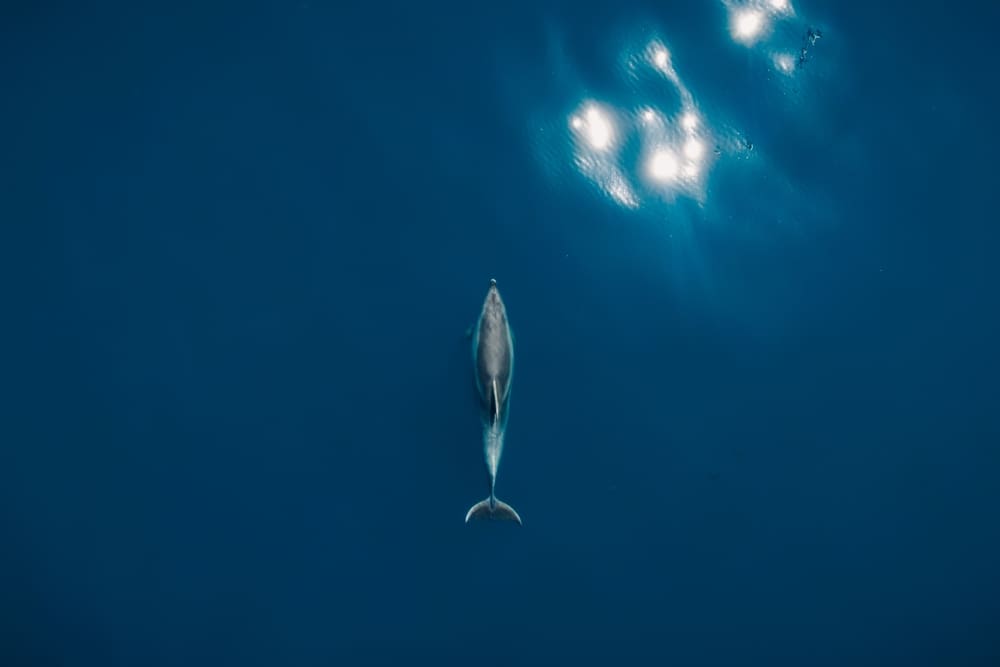
Dolphins are among the most dynamic and cooperative marine subjects. Pods of bottlenose dolphins often approach boats out of curiosity, ride bow waves, and perform aerial displays that provide extraordinary photographic opportunities. The key is to be ready at all times — dolphins appear without warning and can disappear just as quickly.
Wide-angle and moderate telephoto focal lengths (70–200mm) work best for dolphins close to boats. Their speed and proximity mean that a long telephoto is often too difficult to aim and focus on rapidly moving subjects at close range. Track the dolphins’ path and pre-aim your camera where you anticipate they will surface.
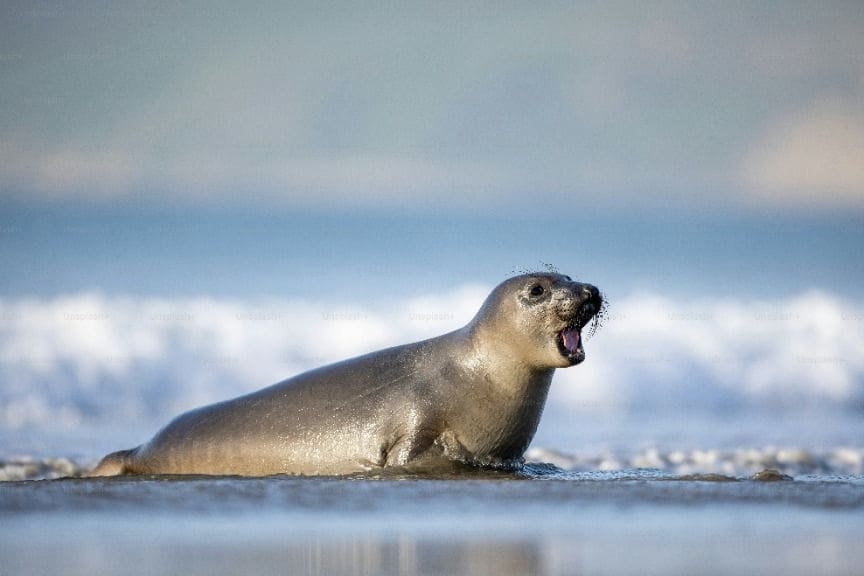
Seal colonies provide more predictable photographic opportunities. Australian fur seals and sea lions gather at established haul-out sites along the southern Australian coastline, and many sites can be accessed from shore or from guided boat tours. Seals are generally tolerant of photographers at respectful distances, and their expressive faces and playful behaviour make them exceptionally photogenic.
Underwater encounters with seals — swimming with them while snorkelling — produce some of the most magical marine wildlife images possible. Young seals are naturally curious and often approach snorkellers closely, providing face-to-face encounters that result in intimate, engaging photographs. A wildlife photography course covers the techniques and safety considerations for underwater wildlife encounters.
Post-Processing Marine Wildlife Images
Marine wildlife images often benefit from specific post-processing adjustments. Salt haze, atmospheric scatter, and the reflective marine environment can reduce contrast and colour saturation in your images.
In Lightroom, increase clarity and dehaze sliders to cut through atmospheric haze and restore punch to distant subjects. Adjust white balance to counteract the blue colour cast that marine environments often produce. Increase saturation selectively — boosting blues and teals in the water while maintaining natural tones on the animal.
Cropping is frequently necessary because marine subjects are often smaller in the frame than optimal, even with long telephoto lenses. Shooting at high resolution (40+ megapixels on modern cameras) provides generous cropping latitude without sacrificing output quality.
A professional photography course builds the post-processing skills needed to refine marine wildlife images to their full potential. Adobe’s wildlife photography editing tutorials provide supplementary guidance.
Dive Into Marine Wildlife Photography
Australia’s marine environment offers photographic experiences unlike anywhere else on Earth. If you are ready to develop the skills needed to capture dolphins, whales, seals, and the incredible diversity of ocean life around our coastline, explore the Wildlife Photography Course at Australian Photography School. With expert tutors, a professional camera included, and flexible online study, you will build the technical and fieldcraft skills that extraordinary marine images demand. Contact our team today and start capturing the magic of Australia’s oceans.